
In the modern financial ecosystem, a credit card is no longer just a plastic tool for debt—it is a high-performance financial instrument. For those with excellent credit scores, the transition from a “standard” cashback card to a Premium Travel Credit Card represents a major shift in lifestyle.
But with annual fees now reaching upwards of $700 to $900, the stakes are higher than ever. Is a premium card a status symbol, or a savvy investment? This guide breaks down the mechanics of luxury credit, the “Big Three” contenders of 2026, and how to ensure you never pay for an annual fee out of pocket.
🏛️ What Defines a “Premium” Credit Card in 2026?
A premium card is defined by more than just its heavy metal construction. In 2026, the industry has shifted toward “Lifestyle Integration.” Banks are no longer just giving you points; they are paying for your streaming services, your gym memberships, and your airport comfort.
The Anatomy of Premium Benefits:
Massive Welcome Bonuses: Often ranging from 75,000 to 150,000 points, worth over $1,500 when redeemed correctly.
Airport Lounge Access: Unrestricted entry into Centurion Lounges, Sapphire Lounges, and the Priority Pass network.
Statement Credits: “Coupon book” style perks that reimburse you for travel, dining, and digital entertainment.
Primary Rental Car Insurance: Coverage that pays for damage to a rental car before your personal insurance is even touched.
Elite Status: Immediate upgrades to Gold or Platinum status at hotel chains like Marriott, Hilton, and Hyatt.
🏆 The “Big Three” Comparison: 2026 Leaderboard
To choose the right card, you must understand the “personalities” of the top contenders. Here is how the market looks in early 2026.
- The American Express® Platinum Card: The Luxury Legend
Annual Fee: $895 (See Rates & Fees)
Best For: The Frequent Flyer and Luxury Seeker.
The Amex Platinum remains the “heavyweight champion” of travel. While its annual fee is the highest, its sheer volume of credits—including $200 for hotels, $200 for airline fees, and $240 for digital entertainment—can technically bring your “effective” cost to near zero.
Key 2026 Perk: Access to the newly expanded Global Lounge Collection, the largest network in the world.
The Math: If you travel 5+ times a year and use Uber, this card pays for itself. - Chase Sapphire Reserve®: The Versatile Powerhouse
Annual Fee: $795
Best For: The Foodie and Domestic Traveler.
Chase has pivoted the Sapphire Reserve to dominate the Dining and Lifestyle space. With its “Pay Yourself Back” feature and a 50% point-value boost when booking through the Chase Travel Portal, it offers the most flexible points in the industry (Ultimate Rewards).
Key 2026 Perk: High earning rates on dining (3x) and travel (3x to 10x), coupled with a $300 annual travel credit that is automatically applied to anything from a flight to a parking garage fee. - Capital One Venture X: The “Math” Favorite
Annual Fee: $395
Best For: The Savvy Minimalist and “One-Card” Users.
The Venture X disrupted the industry by offering premium perks for a mid-tier price. It is the only premium card that arguably pays you to hold it.
The Math: You get a $300 travel credit and 10,000 anniversary miles (worth $100). That’s $400 in value for a $395 fee.
Key 2026 Perk: Unlimited 2x miles on every single purchase, removing the need to track “categories.”
🔍 How to Calculate Your “Effective Annual Fee”
Before applying, you must perform a “Break-Even Analysis.” Advertisers love readers who understand this concept because it shows high financial intent.
🛡️ Hidden Protections: Why Premium is “Safe”
In 2026, premium cards act as a safety net. This is where most beginners overlook the value:
Trip Cancellation/Interruption Insurance: If you get sick and can’t fly, the bank can reimburse you up to $10,000 for non-refundable tickets.
Purchase Protection: If you buy a $1,200 iPhone and it’s stolen within 90 days, many premium cards will refund the full amount.
Extended Warranty: Most premium cards add an extra year to a manufacturer’s warranty on electronics and appliances.
🚀 The 4-Step Roadmap to Your First Premium Card
Step 1: Check Your Credit “Health”
You generally need a FICO score of 740+ to be considered for these cards. If you aren’t there yet, spend 6 months lowering your “Credit Utilization” (keep it under 10%) to boost your score.
Step 2: The “Rule” Audit
Banks have secret rules. Chase’s 5/24 Rule means they will automatically decline you if you have opened 5 or more credit cards in the last 24 months. Amex has “Once per Lifetime” bonus rules. Research these before you apply!
Step 3: Match the Card to Your Natural Spend
Don’t get the Amex Platinum if you hate flying. Don’t get the Sapphire Reserve if you never eat out. Look at your last 3 months of bank statements. Where does the money go? Match the 3x or 5x categories to your highest expenses.
Step 4: Time the Application
Welcome bonuses fluctuate. In 2026, we see the highest bonuses in March (Spring Travel) and November (Holiday Spend). Waiting for a “150k point offer” instead of a “100k offer” is effectively like finding $500 on the sidewalk.
💡 Summary: Is It Worth It?
A premium credit card is worth it if you can organize your life around its perks. If you are a disorganized spender, the annual fee will be a burden. If you are a strategic traveler, these cards are the keys to a lifestyle of airport lounges, luxury hotels, and free flights—all funded by the bank’s marketing budget.
Author

queenalisha232@gmail.com
Related Posts
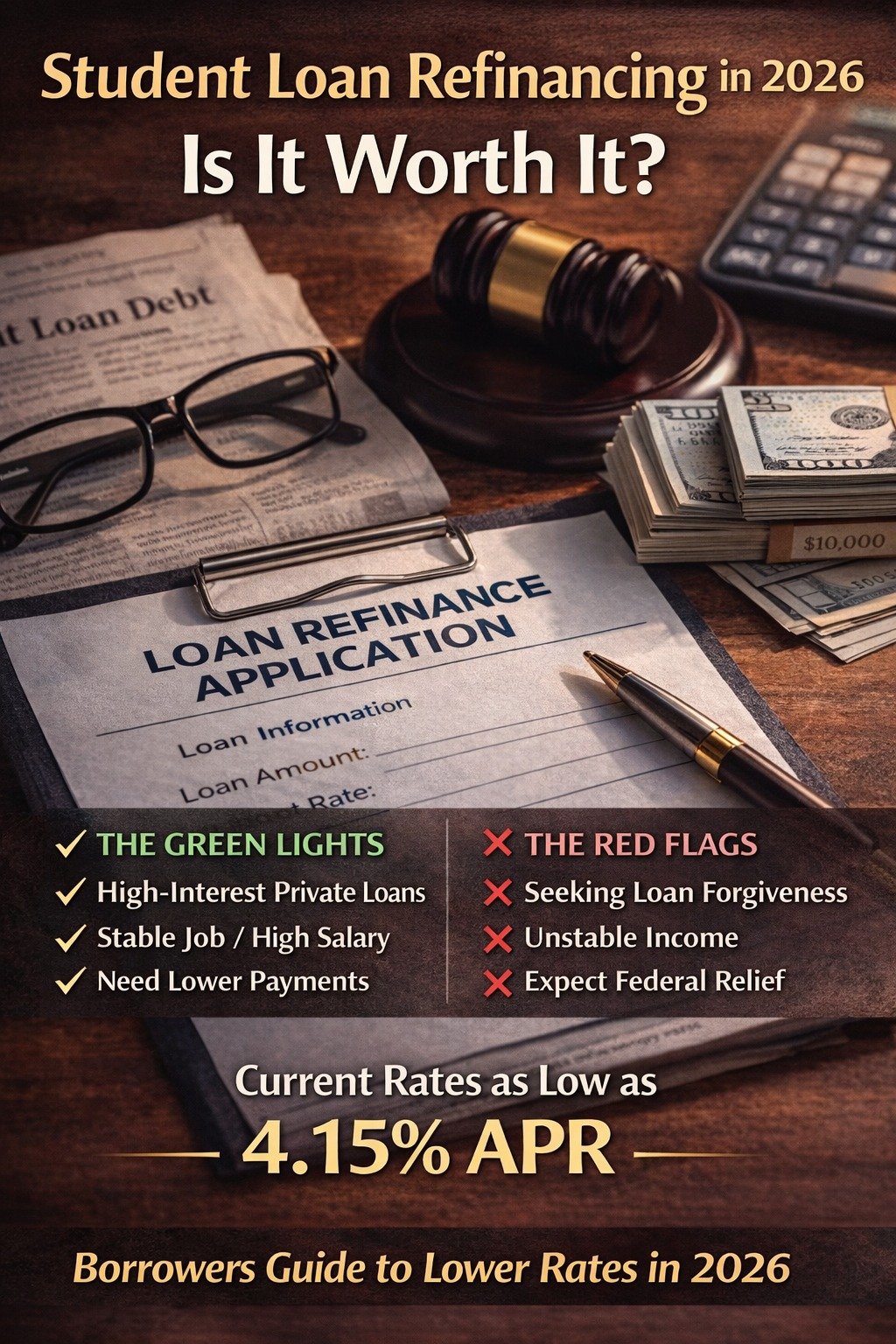
Student Loan Refinancing in 2026: Is It Worth It?
For years, student loan borrowers were told to “wait and see” as federal payment pauses and forgiveness debates dominated the headlines. However,...
Read out all
Travel Hacking 2026: How to Fly Business Class Using Credit Card Points
In the golden age of travel hacking, flying Business Class is no longer a luxury reserved for the 1%. In 2026, it...
Read out all
The 800 Club: How to Build a Perfect Credit Score in 12 Months (2026 Guide)
The 800 Club: How to Build a Perfect Credit Score in 12 Months (2026 Guide)In the financial landscape of 2026, an 800...
Read out all
Maximize Your Wealth: The 7 Best High-Yield Savings Accounts of 2026
In the financial landscape of 2026, the mantra “cash is king” has taken on a new meaning. While the volatile markets of...
Read out all